Appearance
LIBERO
LIBERO tests a Franka Panda arm on tabletop pick-and-place with a language instruction. Behind the scenes, Manifold runs Lifelong-Robot-Learning/LIBERO.
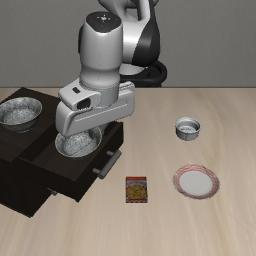
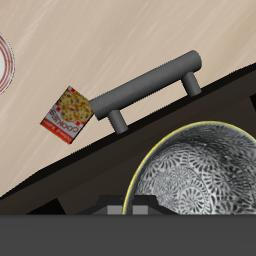
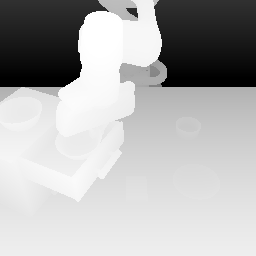
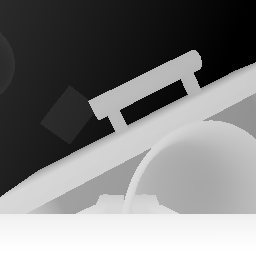
It contains four suites, each focusing on a different axis of variation:
libero-spatialchanges where the target object sitslibero-objectswaps which object is the targetlibero-goalrephrases the goallibero-10is ten longer-horizon tasks
Each of the four runs 10 tasks with 50 episodes per task, so one suite is a 500 episode run.
| Benchmark | Tasks | Episodes per task | Total episodes |
|---|---|---|---|
libero-spatial | 10 | 50 | 500 |
libero-object | 10 | 50 | 500 |
libero-goal | 10 | 50 | 500 |
libero-10 | 10 | 50 | 500 |
Contract
Observation
Each step, the benchmark sends an observation with these fields. If Manifold has adapters for the difference, it converts the observation to the form that your policy signature declares. Then it passes the observation to your policy.
| Field | Values | Meaning |
|---|---|---|
state["ee_pose"] | x, y, z | position in meters |
| qx, qy, qz, qw | rotation as a quaternion, scalar last | |
| f0, f1 | finger positions in meters, offset from the gripper centerline; 0 is closed, 0.04 is fully open; the second finger's value is negative | |
instruction | the task prompt, a string | |
sensors["agentview"] | 256x256 color image, uint8 | |
sensors["wrist"] | 256x256 color image, uint8 | |
sensors["agentview_depth"] | 256x256 depth image, float32 meters | |
sensors["wrist_depth"] | 256x256 depth image, float32 meters | |
extrinsics | one 4x4 camera-to-world pose per camera, keyed by camera name |
Check the expected orientation of your policy
Manifold's LIBERO-based benchmarks serve camera images exactly as MuJoCo renders them.
FLIPPED_VERTICALRaw MuJoCo and Manifold
FLIPPED_HORIZONTALCommon dataset orientation
Because of the way MuJoCo OpenGL buffers are emitted directly, the images will be FLIPPED_VERTICAL relative to the actual scene. The LIBERO signature in Manifold's SDK declares this to avoid confusion.
Unfortunately, common LIBERO training datasets (OpenVLA RLDS, HuggingFaceVLA/libero) apply a misleading 180-degree rotation of the raw MuJoCo output, which turns the images the right way up but horizontally mirrored relative to the real scene.
Manifold always declares image orientation relative to the actual scene.
- If your model was trained on frames that match the actual scene, declare
UPRIGHTin your policy signature. - If your model was trained on raw MuJoCo output, declare
FLIPPED_VERTICALin your policy signature. - If your model was trained on the OpenVLA RLDS or HuggingFaceVLA/libero preprocessing (raw MuJoCo rotated 180 degrees), declare
FLIPPED_HORIZONTALin your policy signature. A 180-degree rotation of a vertically flipped image is a horizontal mirror relative to the actual scene. ROTATED_180fits only frames that show the actual scene rotated 180 degrees, which is uncommon in published LIBERO datasets.
To learn more, read Your robot may be learning the world flipped.
Action
Return actions in the exact format that your policy signature declares. Manifold will attempt to convert your policy's output to match what the benchmark accepts.
Compatible policy signatures
Change the values to match your policy. If the policy signature below matches what your policy natively requires, then it is guaranteed to be compatible with LIBERO.
Action rotation
Action gripper
ProprioceptionFormat
End effector pose
CameraOrientationSize
Show policy signature
python
POLICY_SIGNATURE = PolicySignature(
    action_space=EEActionSpace(
        rotation=RotationFormat.AXIS_ANGLE,
        gripper=GripperFormat.SIGNED_OPEN_LOW,
        delta=True,
    ),
    proprioception=Proprioception(
        ee_pose=EEObservationSpec(
            rotation=RotationFormat.QUATERNION,
            gripper=GripperObservationSpec(dim=2),
        ),
    ),
    cameras=(
        Camera(
            name="agentview",
            shape=(256, 256, 3),
            mount=Mount.SCENE,
            orientation=CameraOrientation.FLIPPED_VERTICAL,
        ),
        Camera(
            name="wrist",
            shape=(256, 256, 3),
            mount=Mount.WRIST,
            orientation=CameraOrientation.FLIPPED_VERTICAL,
        ),
    ),
    instruction=True,
)
Depth and camera calibration
Running LIBERO on Manifold provides depth maps in addition to regular RGB images. Each observation returns a depth map and camera calibration data.
python
from manifold.benchmarks.libero import LIBERO

# The 3x3 intrinsic matrix, fixed for the whole run:
K = LIBERO.observation_space.camera("agentview_depth").calibration.intrinsics.matrix()

def infer(observation):
    depth = observation.sensors["agentview_depth"]    # (256, 256, 1) float32, meters
    pose = observation.extrinsics["agentview_depth"]  # (4, 4) camera-to-world pose
    ...
Depth is recorded in meters at the same resolution as the RGB image. Beyond the camera's range, the value is inf.
Debugging and testing
- The gripper opens at -1 and closes at +1. A flipped gripper can fail silently, and usually shows up as rapid opening and closing during the rollout.
- Observation quaternions are scalar last (x, y, z, w). Check the order your rotation library uses before converting.
- Actions are deltas. LIBERO applies them relative to the current pose.
- The rotation action is axis-angle, in radians.
- A policy that predicts joint angles needs forward kinematics. LIBERO only accepts end-effector deltas, so joint predictions must be converted with FK against a Franka model that matches the simulator. A mismatched model adds a pose bias to every action.
To check your policy end to end before a full suite run, submit it against debug-libero, a small debug version of this benchmark.
For the full walkthrough, see Serve your policy.